
In contrast to the US which is "doing a lot of work" in developing and manufacturing Unmanned Combat Aerial Vehicles (UCAVs), India is more focused on developing UAVs as it considers intelligence gathering more challenging in future wars, Defence Research and Development Organisation said on Friday.
Bio-toilets developed by the Defence Research and Development Organisation on Tuesday earned praise from Prime Minister Manmohan Singh who said that these could go a long way in solving the problem of open defecation in rural India.

The Chinese inference is that if the Chinese visa is embossed on an Indian passport, held by Indian citizens from Arunachal Pradesh, it may be tantamount to recognising Indian sovereignty over Arunachal Pradesh, states Rup Narayan Das.
The test of the indigenously built Intermediate Range Ballistic Missile was carried out from a mobile launcher at about 1006 hrs from launch pad-4 of Integrated Test Range at Wheelers Island near Dhamra, about 80 km from Balasore in Orissa, defence sources said.
A mock air defence exercise relating to India's indigenously developed interceptor missile is carried out from Wheeler's island off the Orissa coast today.
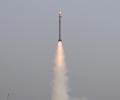
The MRSAM is amongst the most lethal surface-to-air missiles in service anywhere.

As an aerospace scientist, Kalam worked with India's two major space research organisations --DRDO and ISRO.
Design engineers are critical to producing state of art weapons like submarines, electronic warfare system, setting up networking of armed forces and for forays into frontiers of space and missile technology, he added.
After failing to hit the target in the previous test, the Defence Research and Development Organisation is planning to test-fire the Block II version of the BrahMos supersonic cruise missile on March 4."We are planning to conduct the second test of the BrahMos Block II version at the Army's test range in Pokharan on March 4 this week," Defence Ministry officials said.
India is developing an unmanned aerial vehicle similar to the American Predator drones with an investment of Rs 1,500 crore and planning unmanned combat vehicles, a key official involved in the project said on Monday.
"The Prithvi missile was test-fired as part of a user's trial by the Indian Army and the test was successful," defence sources said. The 8.56 metre-long and one metre thick Prithvi missile can carry a pay load of 1000 kg explosives.
Surface-to-surface Agni V missile is launched from the Wheeler Island off Odisha coast on Thursday
India on Thursday successfully test-fired the Agni-5 Inter-Continental Ballistic Missile, which was developed by the Defence Research and Development Organisation.The missile was test-fired from Wheeler Island in Odisha at 8.05 am.

It is not clear whether India will go ahead with the plan for the missile test in view of the presence of the Chinese spy ship.
The PM said that India stood for peace and for peaceful resolution of all problems between nations.
The missile was launched from a mobile launcher at the Integrated Test Range at the Wheelers' Island, a defence base in the Bay of Bengal on Orissa coast near in Balasore, Orissa, at 1015 hours. This was the second user trial of the precision target hitting missile to test its 'operational readiness', the scientists said. The last trial was conducted on October 5, 2007, from the same launch site.
Presently, the US and Russia are the only two countries to possess such sophisticated technology.
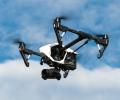
While there were concerns about the security aspect of drones, top government officials were of the view that restricting the drone industry would stifle a sunrise sector which holds significant promise for future, reports Arindam Majumder.
This will be the second launch of the 3,000-km range missile after an unsuccessful test on July nine last year from the integrated test range at Wheeler Island near Balasore in Orissa, defence officials said.

Veteran socialist leader and former Uttar Pradesh chief minister the late Mulayam Singh Yadav, and medical professional Dilip Mahalanabis, known globally for his work on Oral Rehydration Solution (ORS), were among those conferred the Padma Vibhushan award by President Droupadi Murmu on Wednesday.

India has tested a 1,000 kg indigenously-developed glide bomb, which successfully hit a target 100 km away, in the Bay of Bengal off the Odisha coast, making the country self-reliant in guided precision bombs.

In India, the company serves customers such as stock exchanges, brokers, non-banking financial companies, financial services and insurance, IT and IT-enabled services.
French aerospace and defence major Safran may team up with the state-run Defence Research and Development Organisation for indigenously developing an unmanned aerial vehicle project at a cost of over $1 billion.

The government has allowed the Enforcement Directorate to share information about economic offenders with 15 more agencies, including SFIO, CCI and NIA, a move that will expedite nailing of law-breakers. The finance ministry notified changes to the Prevention of Money Laundering Act (PMLA), 2002, on November 22. Through the notification, the Enforcement Directorate (ED), which deals primarily with cases of money laundering and violations of foreign exchange laws, would be able to share data with a total of 25 agencies, including the 10 specified earlier.

Irked by India's status as the world's biggest arms importer, Modi wants to build an advanced defence industry

About 3,000 internet connections, including those of the Ministry of Defence, security agencies, the Central Bureau of Intelligence and banks in Delhi, have been found to be compromised, probably for snooping from foreign locations, according to a report submitted by cyber security experts to government.
 © 2026 Rediff.com - Advertise with us - Disclaimer - Privacy Policy - Sitemap - Feedback - About us - Terms of use - Grievances